
Get to know KYSFMA member— Jeff Hermesch UK Extension Kenton County
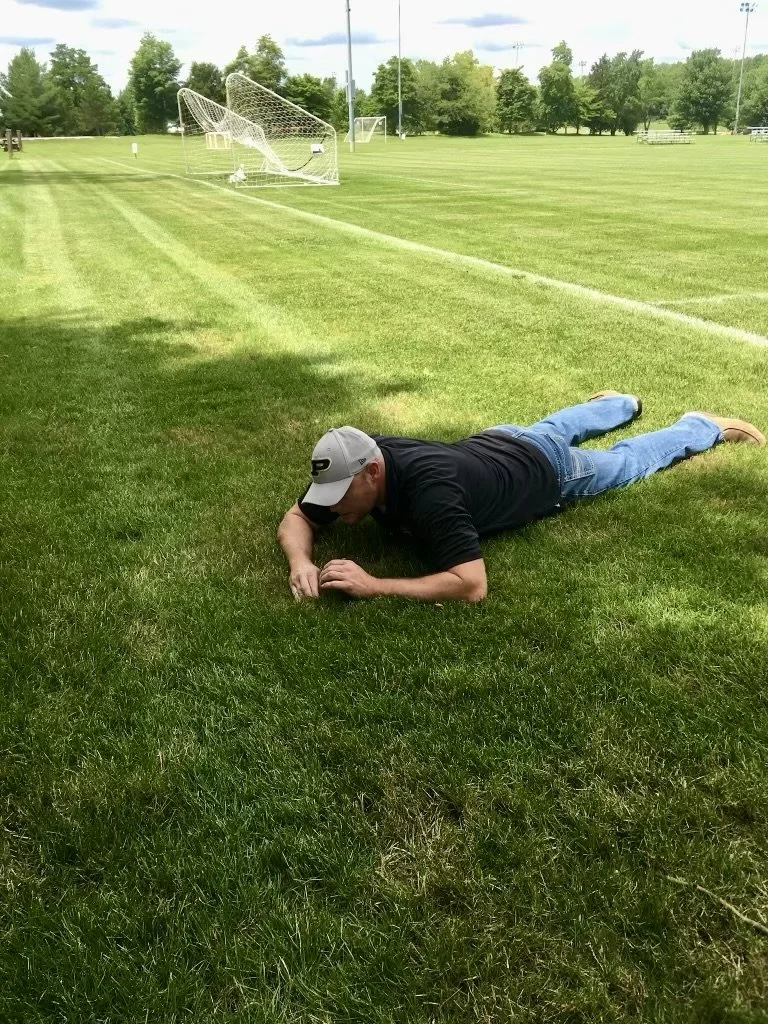
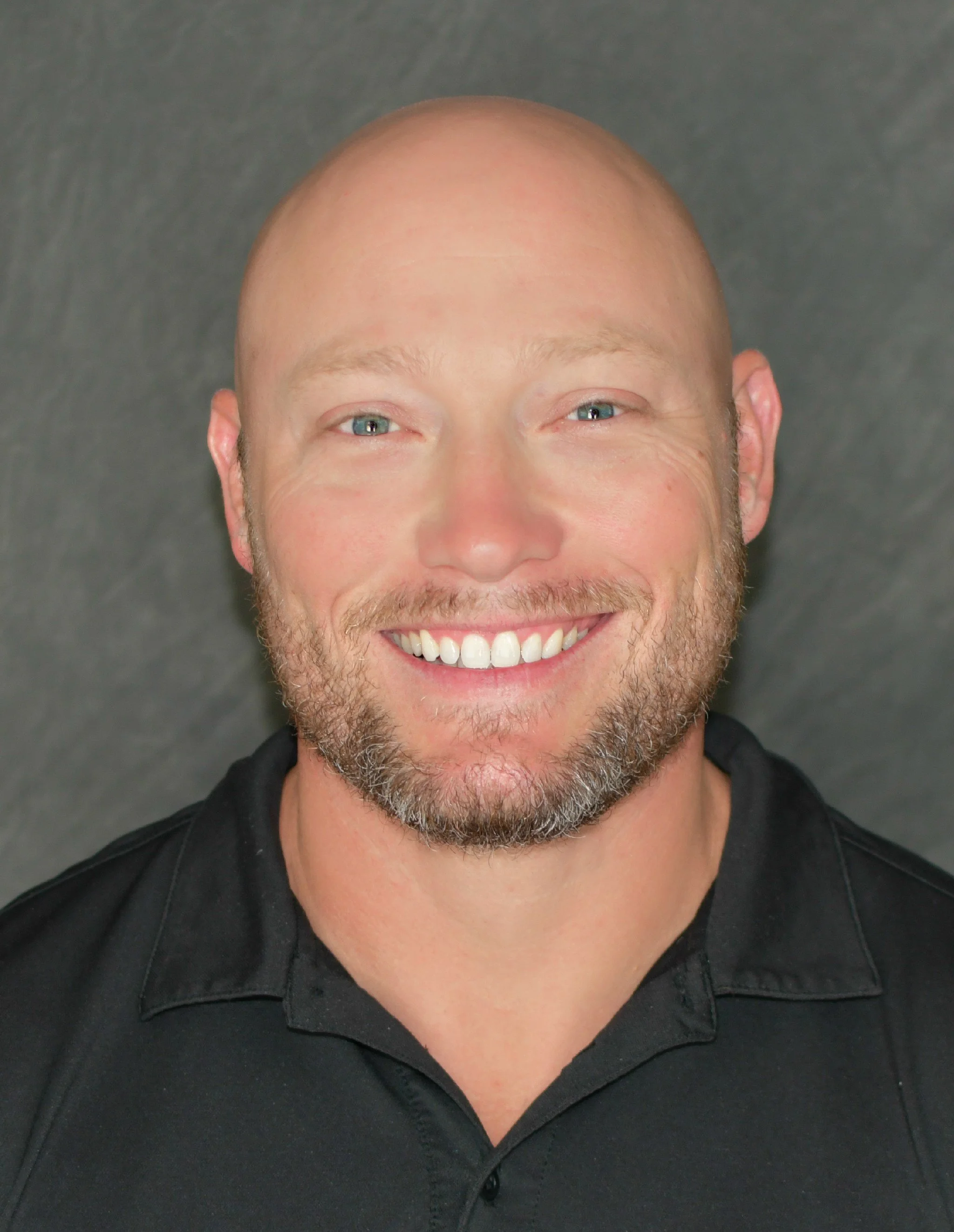
Jeff has been all in on KYSFMA, showing up to our field days and offering support wherever it’s needed. It’s people like Jeff who make this industry so great. We truly appreciate him taking the time to answer our questions and share a little insight into his background.
How did you get into field maintenance?
I grew up in Southeastern Indiana playing sports and spending most of my time outdoors, so it made sense to pursue a Turf Science degree from Purdue University which helped me start my career in Minor League Baseball and NCAA Athletics.
What’s a typical day out here look like for you?
My typical day is much different than most members of KYSFMA as I have worked in the Cooperative Extension Service for Purdue University and now the University of Kentucky for almost 13 years. My previous role was as an Agriculture and Natural Resources Agent, but I am now the County Director for Kenton County. In this new role, I am no longer educating our clientele about turfgrass on a daily basis, but I am supporting the industry in any way possible to keep connected.
What part of the job do you enjoy the most?
I have been in my new role as Kenton County Director with UK Extension for only five months, but I enjoy being able to engage with our clientele and connect them to resources, research, and innovative solutions as a trusted, local resource. Being able to continue to be active in the turfgrass industry as part of KYSMFA is a bonus.
What’s the toughest part about keeping this field in good shape?
From my experiences as a groundskeeper and Extension agent, I would say the unpredictability of the weather and traffic management are the toughest parts along with limited budgets/resources.
How do you decide what needs to get done on a busy day?
As a former groundskeeper, that list depended on game time, the weather, and the number of crew members available to work.
What kind of equipment do you use the most?
In Minor League Baseball, I used a tamp more than any other piece of equipment to repair pitching mounds which is probably why I am having my second shoulder surgery at the end of December. We also used our walk-behind reel mower, ride-on reel mower and infield groomer on a daily basis.
Ever had any funny or unexpected things happen while working on the field?
Too many stories to tell in Minor League Baseball, but while working for the Indianapolis Indians we had a player get locked in the restroom by the dugout when the door handle fell off. The PA announcer stated that he was being detained which caused many to think he was being arrested. We had to shove tools through the duct work so the player could free himself from the restroom. The game was delayed because he was next up to bat and we made ESPN Sportscenter.
How do you handle the field after bad weather?
Communication with the teams and management is key. Keeping people off the field so we can work our magic was always a struggle. In one instance, we got an unexpected storm, and the infield wasn’t tarped, so we hired a helicopter pilot to hover over the infield to dry the field out so we could play later that evening. This was feasible for a Triple-A team but is not an option for most.
What’s something most people don’t realize goes into keeping a field looking good?
The time, effort, dedication, expertise, and money put into athletic field maintenance is something most people have no clue about. Most of my family and friends thought I had the coolest job working in Minor League Baseball but had not idea about the long hours I put in and the expertise it took to make the field meet the expectations of players, coaches, and management.
Which tasks take the longest or require the most patience?
Dirt work always took the longest and required the most patience. The turfgrass was really the easy part of working in baseball. I spent a long time perfecting the mounds, home plate areas, and infield skin on a daily basis.
How do you work around team practices or games?
It is all about communication with the team and educating them about what it takes to make the field perfect. Everything falls into place once everyone understands the process.
What’s one thing players or coaches do that makes your job easier? Harder?
Most players/coaches will adapt schedules and practice habits if they understand the process so that makes the job easier. On rare occasions, you will get players/coaches who want to warm up or do drills in the same area over and over which damages the field.
Is there anything you wish people understood better about field maintenance?
I wish more people understood and appreciated what goes into proper field maintenance. There are so many unsafe athletic fields out there that need attention and educating those decision makers is vital to make change.
What’s your favorite season for field work? Least favorite?
My favorite season for field work would be the fall. Baseball season was winding down, and it was time for the field to recover. This meant we were able to do more specialty work on the field and get away from the daily game day grind. My least favorite was winter because you were stuck inside working on equipment or stuck behind a computer.
If you could upgrade anything about the field or equipment, what would it be?
As an Extension agent, I worked primarily with municipal athletic fields which would have benefited from irrigation systems. The maintenance crews could only do so much without irrigation. Larger budgets and trained professionals paid appropriately would also greatly benefit these types of fields.
