
Get to Know KYSFMA Member: Brock Hammond Louisville Bats
How did you get into field maintenance?
I started out playing baseball through college which is where I began to learn about taking care of clay and the infield skin on a little more elementary level. I then started working at a golf course part time when I had a little free time during the season. I fell in love with professional turf and maintaining it, so when I came across my opportunity with the Bats it was the best of both worlds combining baseball and pro turf.
What’s a typical day out here look like for you?
A typical day can vary for us; our weeks are typically separated by games or no games. On game weeks we have daily tasks like mowing and cleaning up our warning track that we do daily before moving into things like BP setup and eventually getting everything together for the game. On nongame weeks we tend to do some bigger cultivation or clay projects so we have multiple days for cleanup and do get bigger sections finished or more non typical projects.
What part of the job do you enjoy the most?
I enjoy seeing the finished product and hearing feedback from players. You never realize the effect you can have on the game simply from adding water in certain areas or mowing the grass taller. Watching the field perform as it should is rewarding but when the feedback from the players is also just as good I feel like that's one of the main reasons we do what we do.
What’s the toughest part about keeping this field in good shape?
Being in the transition zone, the hardest part of keeping the field in good shape is trying to keep up with and predict the weather. As most know we have big swings in weather over short periods of time so being able to take action when needed based off that is crucial to staying ahead of disease and overuse.
How do you decide what needs to get done on a busy day?
On a game day we typically prioritize based off what will need to be done on the field before the team comes out to begin early work. Past that we typically delegate based off who we have working and the importance of the jobs at hand. On nongame days we typically have a list of what needs to be done before the start of the next homestand, and work based off what would need the most time to heal/recover or if we have anything that's time sensitive then typically just work down the list.
What kind of equipment do you use the most?
We use tons of equipment with the different surfaces; however I'd say between our reel mower and the hose to water the infield there aren't two more used pieces of equipment.
Ever had any funny or unexpected things happen while working on the field?
Nothing stands out in particular, but we get good laughs daily with the fellas.
How do you handle the field after bad weather?
First, we go out and see where we need to go to work, depending on if we tarped or not, we typically just have warning track work to do after a big rain. We will bring out scoops of material and dump it where needed while also repairing all washout areas. If we did not tarp we just have to assess the infield and see what were able to do. Sometimes hand dragging or walking with scrapers to open it up is essential, but it all just depends on the scenario and how much rain.
What’s something most people don’t realize goes into keeping a field looking good?
I don't think people grasp the amount of work and time that have to go into a field to keep it at a professional standard; it truly takes a team. We wouldn't be able to keep the field to the standard we do without the amazing crew we have. All throughout the day we have guys on different shifts helping with different aspects of the day to day, and we wouldn't have the field we do if it wasn't for all of them.
Which tasks take the longest or require the most patience?
Edging the infield and outfield is definitely the most tedious task for me. We try to stay ahead of it so we don't start to create trenches on the lips from edging so much grass away, but you have to be so careful when cleaning up afterwards it just makes for a long backbreaking process that is done weekly during the growing season.
How do you work around team practices or games?
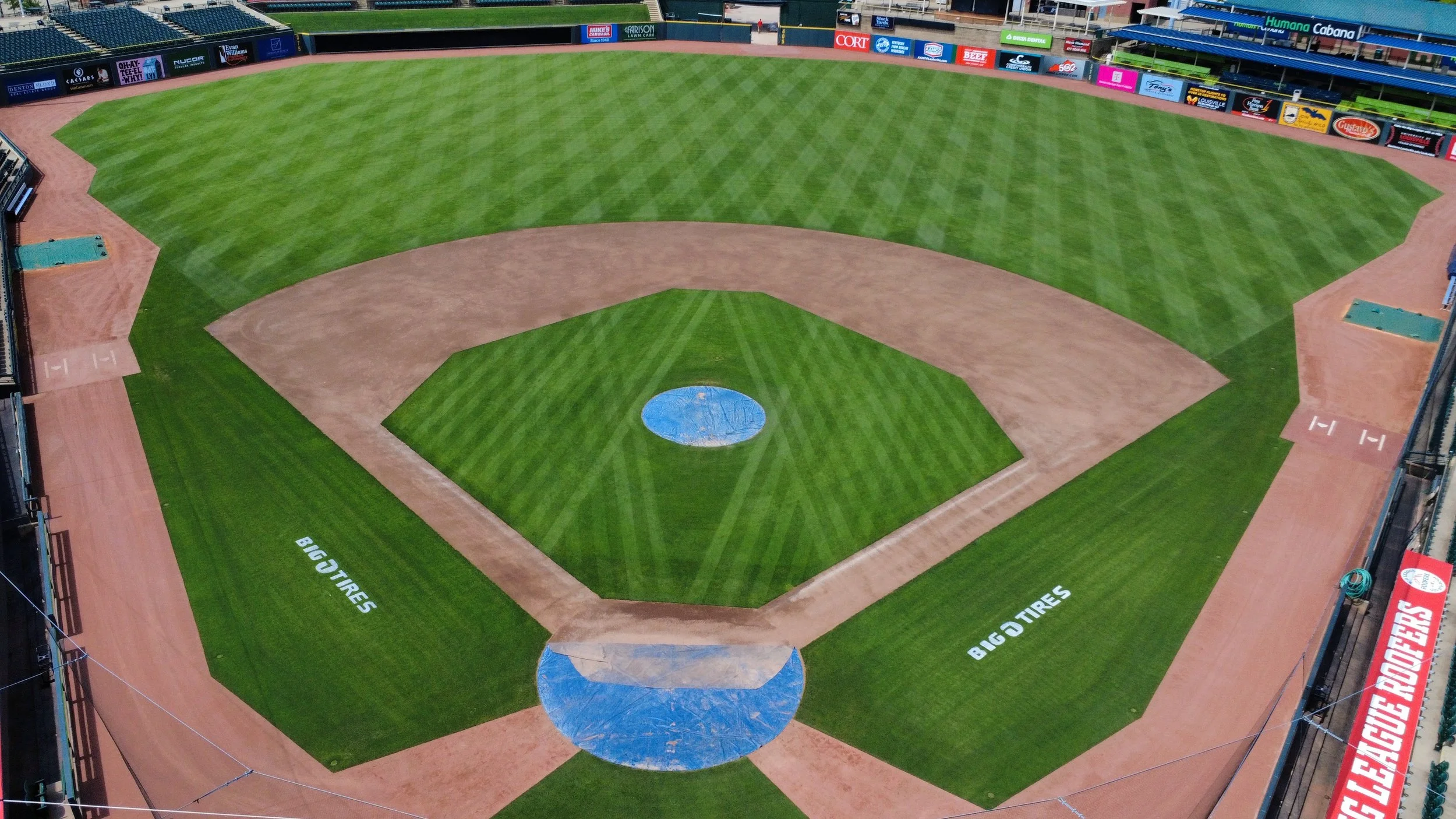
We have a pretty good schedule as far as giving the field a break, typically 6 days of games then 8 days off with nothing taking place on the off days. At the beginning of the 8 days, we do some more extensive cultivation to take advantage of the recovery time followed by fertilizer applications and any clay work that needs to be done. As far as keeping up with the field during game weeks we just work around the team, on evening games we come in and get most everything done in the morning but on day games we do most everything pregame still and just stay after to mow post-game because of the morning dew.
What’s one thing players or coaches do that makes your job easier? Harder?
Our coaching staff has been great my whole time in Louisville, they always keep us up to date on what they're doing and how the field is playing. Something they really do to help is send us the schedule for their early work the next the night before, that way we know what kind of things we can do the following morning and how much time we have before things need to be setup.
Is there anything you wish people understood better about field maintenance?
I think there is always room to educate people in field maintenance, there's many people that have no clue what it takes to take care of a field that after they learned may be very interested. I think introducing people to the industry and what we actually do on a day to day would be good for people to hear.
What’s your favorite season for field work? Least favorite?
My favorite season for field work is early summer when you don't have to wear a sweatshirt anymore and the Bermuda grass really starts taking off. My least favorite is by far winter, I'm not a huge fan of the cold and man do I miss baseball.
If you could upgrade anything about the field or equipment, what would it be?
I would love to have a whole new field, Ours is going on it's 26th year and shows it in the soil profile. As far as equipment though we have been very grateful as we received a variety of equipment over the past couple of years.
